What Are the Top Glass Sheet Art Designs for Global Buyers?

Time:2026-10-07 Author:Oliver
0%

Global buyers are looking beyond ordinary decorative panels. They want Glass Sheet Art with clear visual identity, reliable construction, and practical installation value. A translucent blue panel can resemble shallow water. A ribbed amber sheet can create warm shadows across a hotel lobby. These details influence purchasing decisions.

The strongest designs usually include kiln-formed glass, laminated color layers, fused geometric patterns, etched botanical surfaces, and recycled glass compositions. Each style serves a different space. Minimalist sheets suit modern offices. Hand-textured panels bring character to restaurants and private residences. Oversized architectural pieces can become focal points, but their weight, packaging, and mounting requirements need careful review.

Glass artist Dale Chihuly is widely associated with the observation, “Glass has a life of its own.” This idea remains important for international buyers. Heat, thickness, pigments, and cooling time can alter the final surface. Even experienced makers cannot control every small variation. That is part of the appeal, although it can complicate repeat orders. Samples may look slightly different from finished production. Buyers should request technical drawings, close-up photographs, edge-finish details, and verified safety specifications. Color accuracy also deserves attention. Screen images can mislead.

This guide examines the top Glass Sheet Art designs for global buyers. It compares appearance, durability, customization, installation demands, and commercial potential. The ranking is not absolute. A delicate etched panel may outperform a bold fused design in one project, then fail elsewhere. Good selection depends on context, not fashion alone.
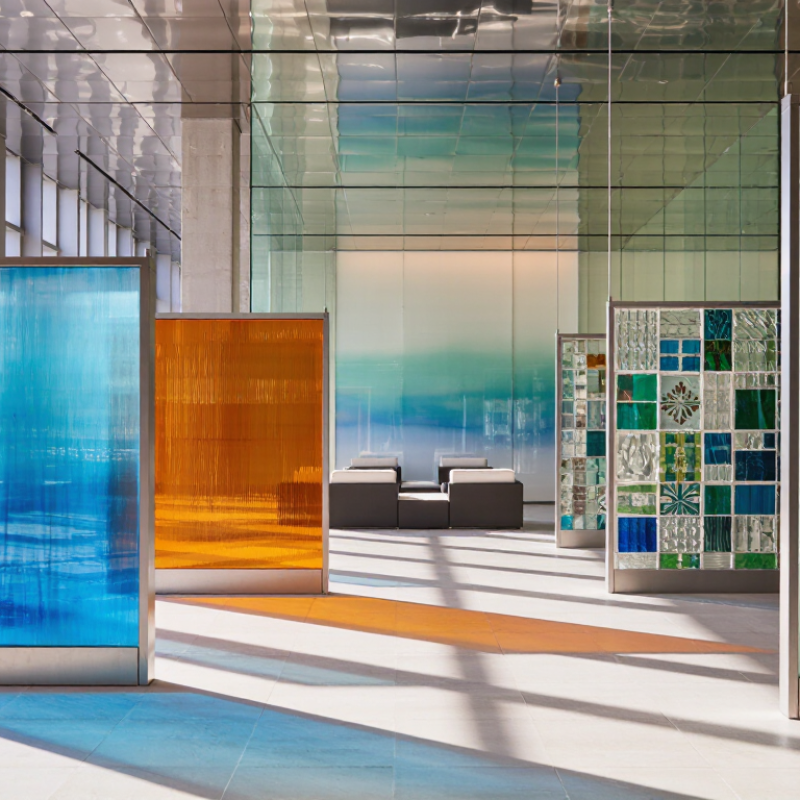
What Are the Top Glass Sheet Art Designs for Global Buyers?

Glass Sheet Art: Definition, Materials, and Core Design Principles

Glass sheet art is decorative or functional artwork made from flat glass panels. It may appear in wall panels, room dividers, cabinet fronts, or illuminated installations. Global buyers often choose designs with clear visual structure and dependable production quality.

Common materials include float glass, tempered glass, laminated glass, and textured glass. Fused glass adds color layers, while recycled glass creates a softer, irregular surface. Materials should match the project’s use.

Tempered glass suits areas needing greater impact resistance. Laminated glass can hold fragments together if breakage occurs. Buyers should request thickness data, edge treatment details, and safety documentation.

Core design begins with proportion, light, and surface balance. Geometric lines suit modern interiors, while botanical textures create a calmer feeling. Transparent sections can enlarge a narrow room. Frosted areas offer privacy without blocking daylight. Color should be tested under natural and artificial lighting.

A sample may look perfect online, yet seem dull beside warm wood. That mistake is common.

In practical inspections, I check corners, bubbles, scratches, print consistency, and color changes across the panel. Small variations can prove handmade character. Too many variations may signal weak process control.

Not every flaw is failure. Still, buyers should define acceptable limits before production. Installation weight, cleaning methods, and local safety requirements also deserve attention. Beautiful glass is not enough. It must work safely in its intended space.

Leading Glass Sheet Art Styles Popular with Global Buyers

Global buyers increasingly favor glass sheet art that combines visual texture with practical installation. Clear fluted glass remains popular for partitions, cabinet doors, and softly lit interiors. Ribbed lines create privacy without blocking daylight. Frosted sheets suit bathrooms and office spaces, while amber, smoke, and pale green tints add warmth to neutral rooms. Hand-cast surfaces offer deeper character, including bubbles, ripples, and uneven edges. They look human. Perfectly uniform panels can feel less expressive.

A 2024 Grand View Research report estimated the global flat glass market at more than US$130 billion in 2023, with construction and interior applications driving demand. This wider market supports interest in decorative sheet formats. A separate 2024 report from Mordor Intelligence identified architectural glass as a growing category, supported by energy-conscious design and renovation activity. These figures do not measure glass art directly. Still, they reveal the commercial environment surrounding it. Buyers are watching both appearance and performance.

Patterned laminated sheets are also gaining attention because they combine artwork with safety and durability. Geometric inlays, botanical impressions, and layered translucent colors work well in hospitality spaces and custom homes. Yet handmade glass has limitations. Thickness may vary slightly. Colors can shift between batches. That is not always a defect, but it requires honest samples and clear specifications. Experienced buyers usually request light-transmission data, edge-finish details, packaging standards, and installation guidance before ordering. Small flaws can become costly surprises.

How Glass Sheet Art Designs Are Created Step by Step

What Are the Top Glass Sheet Art Designs for Global Buyers?

Glass sheet art begins with a clear design brief. Global buyers often request botanical patterns, geometric lines, or layered architectural scenes. A studio team converts the sketch into a scale drawing. Every line needs a purpose.

The maker selects low-iron, tempered, or laminated glass according to the final use. The European Commission’s glass manufacturing reference document places melting temperatures commonly between 1,400 and 1,600°C. That heat explains why color powders, metal oxides, and recycled fragments must be tested carefully.

The pieces are then cut, cleaned, and arranged on a kiln shelf. Small gaps matter. They control visual rhythm and reduce stress points.

The kiln follows a controlled heating and cooling schedule. The International Energy Agency identifies high-temperature process heat as a major energy demand in glass production. After firing, the surface may receive etching, polishing, or a second color layer. Technicians inspect edges, bubbles, distortion, and color consistency.

Dimensional tolerance should be recorded, especially for international shipping. I still reject some attractive panels after testing. A beautiful design can fail when sunlight exposes uneven color.

The weak point is often timing. Faster cooling saves energy, but it may increase internal stress. Experienced makers therefore balance appearance, durability, and transport conditions rather than trusting the first successful sample.

Key Factors for Evaluating Quality, Safety, and Durability

What Are the Top Glass Sheet Art Designs for Global Buyers?

Glass sheet art ranges from textured panels and layered color fields to etched botanical scenes. For global buyers, visual appeal matters, but quality and safety deserve closer attention. A well-made panel should show even thickness, clean edges, and consistent color under daylight. Hold a sample near a window. Uneven waves or cloudy patches may reveal processing problems.

Safety begins with the glass structure. Tempered glass offers stronger impact resistance, while laminated glass can hold fragments together after breakage. Ask for thickness data, heat-treatment records, and test documentation from a qualified laboratory. Edge finishing also matters. Sharp corners, tiny chips, and exposed stress lines can create installation risks. The artwork should suit its intended wall, ceiling, or partition location.

Durability depends on more than the glass itself. Check resistance to humidity, temperature changes, cleaning chemicals, and ultraviolet exposure. A reliable supplier should explain installation limits, packaging methods, and batch traceability. Request a physical sample before approving a large order. Digital colors can mislead. Even careful inspections are imperfect; subtle distortion may appear only after mounting. That possibility deserves honest discussion, not optimistic promises. A thoughtful evaluation balances artistic detail with measurable performance, documented handling, and realistic maintenance expectations.

Top Glass Sheet Art Designs for Global Buyers

Reference benchmarks for commonly specified decorative glass constructions. Thickness values are representative commercial configurations; safety performance depends on certified fabrication and installation.

Laminated printed glass offers the strongest post-breakage retention, while tempered fused and textured glass are commonly selected for impact resistance. Buyers should verify compliance with applicable safety-glazing requirements such as EN 12150, EN 14449, ASTM C1048, or CPSC 16 CFR 1201.

Custom Options, Applications, and International Buying Considerations

What Are the Top Glass Sheet Art Designs for Global Buyers?

Custom glass sheet art is moving beyond decoration. Popular designs include etched botanical patterns, geometric reliefs, translucent color layers, and softly textured surfaces. These styles suit hotel partitions, retail displays, interior doors, and feature walls. For busy spaces, laminated or tempered glass can improve safety and durability. Buyers should confirm thickness, edge finishing, color stability, and light transmission before approving production. A design may look perfect on a screen, yet appear darker beside warm lighting.

Tips: Request a physical sample. Check it under daylight and indoor lighting. Confirm the final dimensions, tolerances, packaging method, and replacement policy. Ask for test records when the glass will be installed in public or high-traffic areas. Clear drawings reduce costly misunderstandings.

International purchasing requires more than selecting an attractive pattern. Buyers should review export packaging, moisture protection, crate dimensions, and unloading requirements. Local building rules may also affect glass type, fire performance, impact resistance, and installation methods. A reliable supplier should provide drawings, material specifications, inspection photos, and honest lead times. Do not assume every custom color can be repeated exactly; kiln conditions and raw materials may create slight differences. That limitation deserves discussion before payment. In my view, the strongest projects balance visual character with practical maintenance. Dust, fingerprints, and harsh cleaning chemicals can change how a textured surface performs over time. A beautiful design still needs a workable care plan.

FAQS

Which glass sheet art styles are popular with international buyers?

Clear fluted panels, frosted sheets, amber tints, smoke tones, and pale green surfaces remain popular. Hand-cast textures add bubbles, ripples, and uneven edges. These details feel less mechanical. Perfect uniformity is not always better.

Where can decorative glass sheets be used?

Fluted glass suits partitions, cabinet doors, and softly lit interiors. Frosted sheets work well in bathrooms and offices. Patterned panels can decorate hotel areas, retail displays, doors, and feature walls.

How can buyers check glass quality before ordering?

Request a physical sample before approving production. Hold it near a window. Check thickness, color, edges, and cloudy areas. Examine it under daylight and indoor lighting. Digital images can mislead.

Which safety features should buyers request?

Tempered glass offers stronger impact resistance. Laminated glass helps hold fragments together after breakage. Ask for thickness data and heat-treatment records. Qualified laboratory documents may also be necessary.

What details should be confirmed for custom glass art?

Confirm final dimensions, thickness, tolerances, edge finishing, color stability, and light transmission. Request clear drawings. A design may look brighter on a screen than beside warm lighting.

Are small variations in handmade glass acceptable?

Slight thickness changes, bubbles, and color differences can occur between batches. They are not always defects. Still, buyers need honest samples and written specifications. Some variation may surprise you later.

How should buyers evaluate long-term durability?

Check resistance to humidity, temperature changes, ultraviolet exposure, and cleaning chemicals. Textured surfaces may collect dust and fingerprints. Harsh cleaners can change their appearance. A practical care plan matters.

What should international buyers check before shipment?

Review moisture protection, crate dimensions, packaging methods, and unloading requirements. Confirm installation guidance and replacement policies. Ask for inspection photos and realistic lead times. Crates need careful handling.

Can glass color and appearance be repeated exactly?

Not always. Kiln conditions and raw materials may create slight color differences. Subtle distortion can appear only after mounting. Buyers should discuss these limits before payment. Some uncertainty remains.

Conclusion

Glass Sheet Art combines shaped, layered, or textured glass with color, light, and controlled surface treatments to create decorative and functional visual pieces. Its design depends on material selection, including clear, colored, frosted, recycled, or reinforced glass, along with principles such as balance, transparency, contrast, proportion, and safe edge finishing. Popular styles include abstract compositions, geometric patterns, nature-inspired scenes, translucent panels, layered reliefs, and contemporary minimalist designs. Each piece is developed through planning, sketching, glass cutting, surface preparation, assembly, heat treatment, and careful inspection.

For global buyers, quality should be evaluated through clarity, color consistency, structural strength, smooth edges, secure mounting, and resistance to heat, moisture, and everyday wear. Buyers may request customized dimensions, colors, patterns, textures, thicknesses, packaging, and installation solutions for homes, hospitality spaces, offices, public interiors, and artistic displays. International purchasing also requires clear specifications, reliable protective packaging, accurate documentation, consistent production standards, and attention to shipping conditions and local safety expectations.


Oliver

Oliver

Oliver is a seasoned marketing professional with a wealth of expertise in driving brand awareness and engagement. With a deep understanding of our company's product offerings, he consistently delivers high-quality content that enriches our professional blog. His insights not only shed light on......